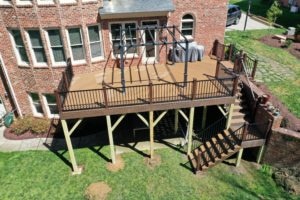
Paver sealing is one of the most common questions Charlotte homeowners ask after a new patio goes in.
Do you need it, how often, and what actually happens if you skip it?
This guide answers all three, with the timing and product choices that fit Charlotte’s sun, humidity, pollen, and red clay.
The detail most people miss is that sealing too often is a bigger risk than sealing too rarely.
By the end you will know exactly when your patio is due and which finish fits how you use it.
Short version: most paver patios in the Charlotte area need sealing every three to five years. Wait at least 30 days after a new installation, and often 60 to 90, so efflorescence can surface and be cleaned first. Seal during a dry, mild stretch in spring or fall, in thin coats. Never stack extra coats just because the last one looks dull.
What’s in this guide
- Do pavers need to be sealed?
- How often should you seal pavers in Charlotte?
- When to seal a new paver patio
- The best time of year to seal in Charlotte
- Wet look vs. natural finish
- How paver sealing is done, step by step
- 5 paver sealing mistakes to avoid
- Signs it is time to reseal
- Frequently asked questions
Do pavers need to be sealed?
No, pavers do not strictly need to be sealed.
Quality concrete pavers are dense, factory-made units designed to handle rain, sun, and freezing nights on their own.
Sealing is a protective layer you add for appearance and easier upkeep, not a structural requirement.
That said, a sealer does real work on a Charlotte patio.
- It slows color fading. Belgard notes that intense sunlight can fade pavers, especially unsealed ones, and Charlotte summers bring a lot of it.
- It resists stains. Grease from the grill, spilled wine, leaf tannins, and red clay tracked in from the yard wipe off more easily.
- It helps hold joint sand. Joint-stabilizing sealers bind the sand between pavers, which means fewer weeds and less washout in summer storms.
- It can deepen color. A color-enhancing sealer brings back the rich tone pavers had on install day.
The tradeoff is upkeep.
Once you seal, you are committing to cleaning and resealing on a schedule, or the finish will wear unevenly.
For a patio you use daily, that is usually worth it.
For a side walkway nobody looks at, many homeowners skip it.
How often should you seal pavers in Charlotte?
Plan on resealing a paver patio every three to five years.
That range comes straight from Belgard’s hardscape maintenance guide, which also warns against sealing more than once every three years.
Belgard caps it at two applications in that window, because too many coats build a surface film that can discolor in sunlight.
Where your patio lands in that range depends on how hard it works.
- Full sun, south or west facing: closer to three years, since UV breaks sealers down fastest.
- Shaded patio under trees: often four to five years for UV, but watch for mildew and leaf stains in between.
- Pool decks: chlorinated splash-out, sunscreen, and constant foot traffic wear a sealer faster.
- Driveways: tire traffic and oil drips usually mean the short end of the range.
- Covered porch or patio: protected from sun and rain, so the long end of the range is realistic.
Charlotte adds a few local pressures.
Long, humid summers feed mildew and algae on shaded pavers.
Spring pine pollen coats everything yellow-green and can stain a patio left unwashed.
Winter brings regular freezing nights followed by mild afternoons, and water sitting in open joints expands each time it freezes.
A healthy sealer and tight joint sand keep that water out.
When should you seal a new paver patio?
Wait at least 30 days after installation before sealing a new paver patio.
In most cases, plan on 60 to 90 days.
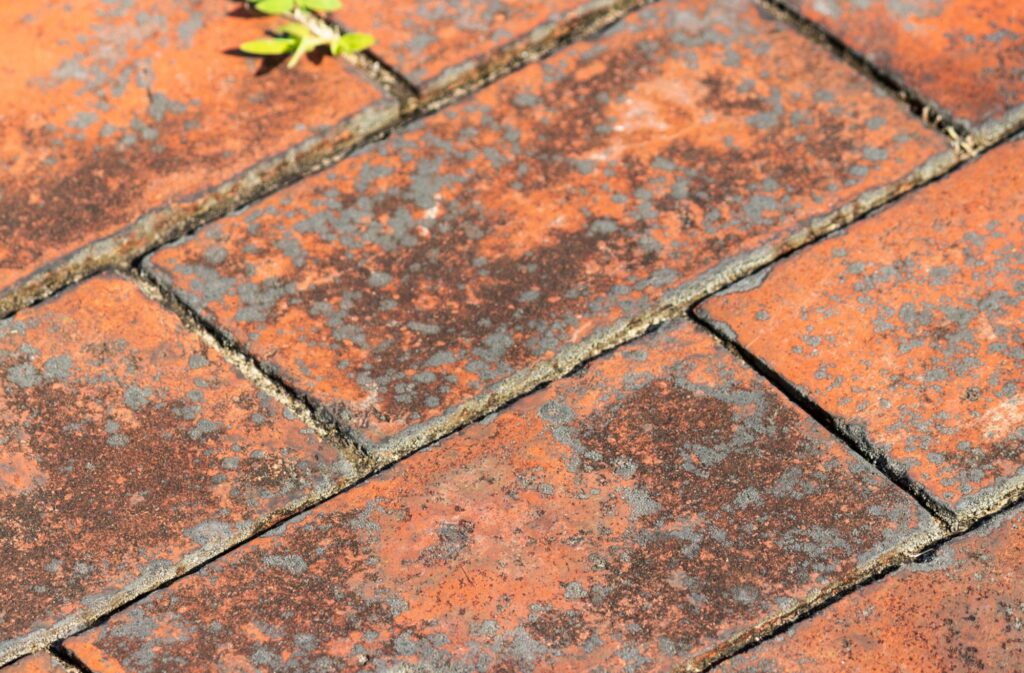
The waiting period is about efflorescence, a white, chalky haze that rises out of new concrete pavers as they cure.
It is harmless and normal, but it needs to surface and be cleaned off before any sealer goes on.
Seal too early and the sealer traps that haze underneath it.
Once that happens, it is very hard to remove without stripping the sealer off entirely.
The joint sand also needs those weeks to settle into the joints and firm up.
Just had a patio built? Our walkthrough of a professional paver patio installation in Charlotte covers what happens before this point.
That includes the base work, which matters far more than any sealer.
Ready to upgrade your outdoor space?
See how A Deck Above brings your deck, patio, or pergola vision to life.
When is the best time of year to seal pavers in Charlotte?
The best time to seal pavers in Charlotte is a dry, mild stretch in fall or late spring.
Most sealers need a dry surface going in and a rain-free window afterward to cure, typically at least a day.
Always check your product’s label for its exact temperature and humidity range.
- Fall (late September to early November): often the best window. Humidity drops, afternoon storms fade, and leaves are the main thing to sweep.
- Late spring (after pollen season): a strong second choice. Sealing in the middle of pine pollen season risks locking yellow dust into the finish.
- Summer: possible, but harder. Hot pavers can make some sealers dry too fast, and pop-up storms can ruin a fresh coat. Work early in the morning if you must.
- Winter: skip it. Cold nights and damp days fall outside most products’ application range.
Pavers also need to be fully dry before sealing, not just dry on top.
After a cleaning or a rainstorm, give the patio a day or two of sun first.
Moisture trapped under a film-forming sealer is a common cause of a cloudy white finish.
Wet look vs. natural finish: which sealer should you use?
The two main choices are a wet-look film-forming sealer or a natural-look penetrating sealer.
Neither is universally better, and the right pick depends on how the space gets used.
Wet-look (film-forming) sealers
These leave a thin coating on the surface that darkens and enriches the color, with a satin to glossy sheen.
They look striking on a dining patio or front walkway, and they make stains easy to wipe up.
The downside is grip, since a glossy film is more slippery when wet.
They also show wear and scuffs, and over-applying them is what causes peeling and discoloration.
Natural-look (penetrating) sealers
These soak into the paver instead of sitting on top, so the patio keeps its original matte look.
They resist water and stains without changing traction much.
That makes them the safer pick for pool decks, steps, and shaded areas that stay damp.
They will not deliver the deep color boost a wet-look product gives.
Joint-stabilizing sealers
Many sealers in both categories also bind the joint sand, hardening it so it resists washout, weeds, and ants.
On a Charlotte patio that takes heavy summer downpours, this is often the most useful feature of all.
Natural stone is its own case.
Flagstone, bluestone, and travertine absorb sealers differently than concrete pavers, so they need a product made for that stone.
Our page on natural stone patios in Charlotte covers those materials in more detail.
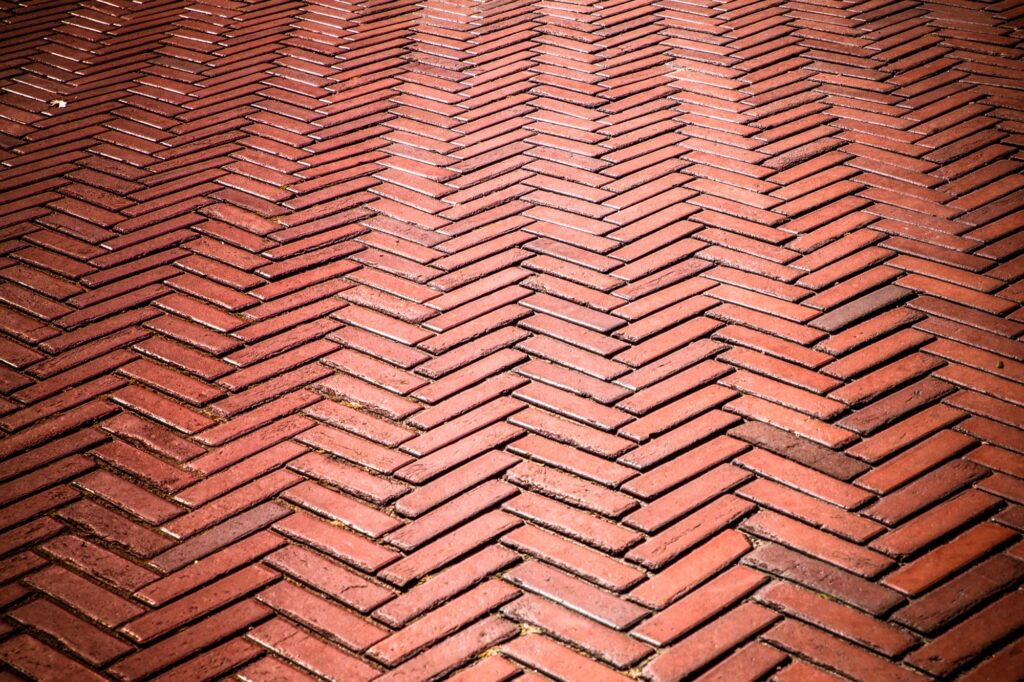
How is paver sealing done, step by step?
Good paver sealing is about 80 percent preparation and 20 percent application.
Here is the order a careful job follows.
1. Clean the pavers thoroughly
Sweep, then wash the surface with a paver cleaner to lift dirt, mildew, and any efflorescence.
Oil and rust stains need their own spot treatment first, because sealing over a stain locks it in.
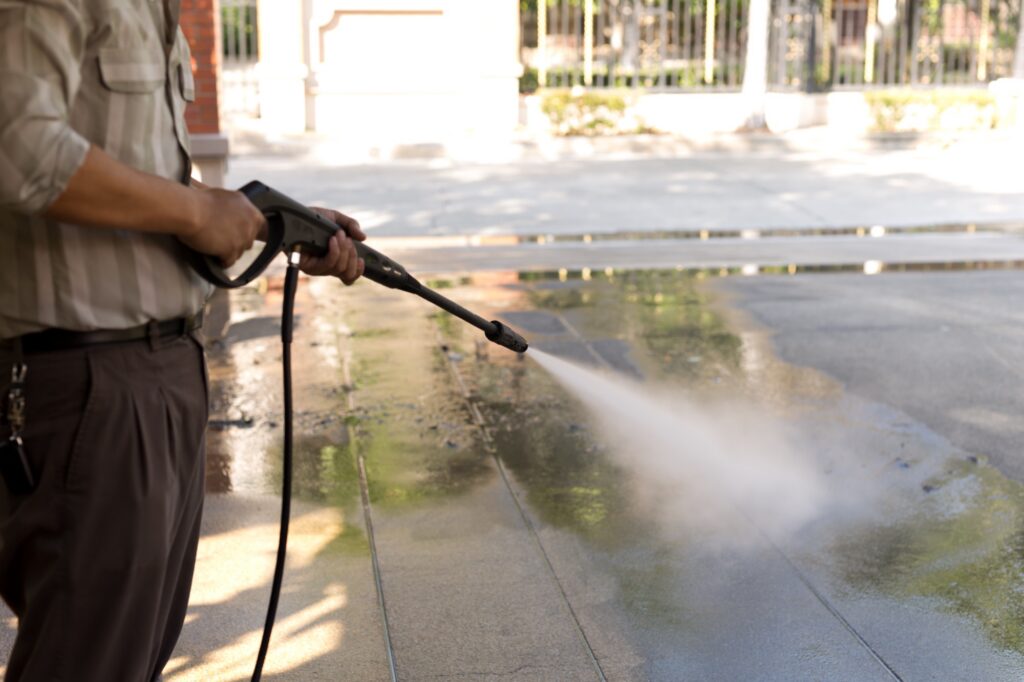
If you pressure wash, use a wide fan tip, keep the wand moving, and hold it at a low angle.
Too much pressure etches the paver surface and blasts the sand out of the joints.
2. Fix low spots and loose pavers
Sealing is the last chance to fix problems cheaply.
Lift and re-level any sunken pavers and replace cracked ones before anything gets coated.
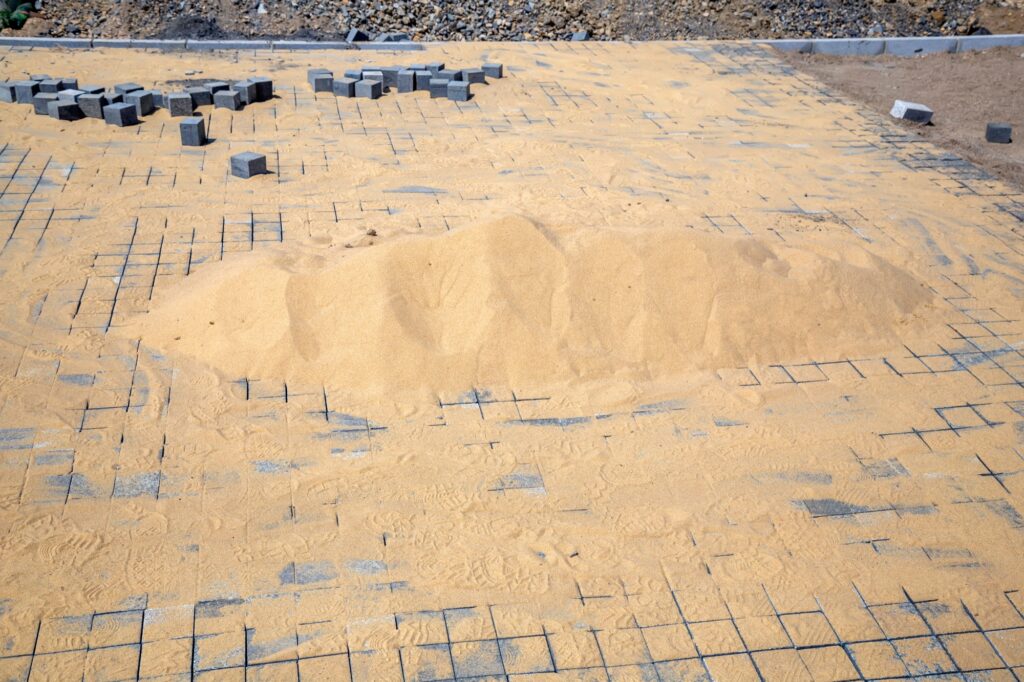
3. Refill the joints
Sweep fresh joint sand into every joint until it sits just below the paver edge.
Use polymeric sand if your sealer calls for it.
Belgard calls the joints the most vulnerable part of any installation, since washed-out joints let pavers shift.
4. Let everything dry
Give the patio at least 24 hours of dry weather, longer after a deep cleaning.
The pavers should be uniformly light in color with no damp, dark patches.
5. Apply thin, even coats
Use a low-pressure sprayer or a roller, working in small sections and keeping a wet edge.
Two thin coats beat one heavy one.
Puddles and drips are what dry into white or cloudy spots.
6. Let it cure
Keep foot traffic off for the time on the label, usually a few hours for light use.
Furniture, grills, and cars should wait about a full day or longer.
Some patios have empty joints or settled pavers after years of neglect.
In that case, it is a repair job before it is a sealing job.
That is worth having a hardscape contractor look at first.
Get a free estimate from A Deck Above
Tell us about your project and we’ll help you plan the space you’ve been picturing.
5 paver sealing mistakes to avoid
Most sealing problems come from one of these five mistakes, and every one is preventable.
1. Sealing too often
It feels like extra protection, but stacking coats builds a thick film.
That film can yellow, peel, and trap moisture.
Stick to the three-to-five-year rhythm.
2. Sealing a damp patio
Moisture under a film-forming sealer turns milky white.
This is one of the most common DIY problems, and fixing it can mean stripping the sealer.
3. Sealing over efflorescence or stains
Whatever is on the surface on sealing day stays there.
Clean first, let it dry, then seal.
4. Blowing out the joint sand
Aggressive pressure washing empties the joints, and a sealer cannot hold sand that is no longer there.
Always refill joints after washing.
5. Choosing gloss for a wet area
A high-gloss finish around a pool or on shaded steps can get slick.
Use a matte penetrating product or add an anti-slip additive in those zones.
What are the signs it is time to reseal your pavers?
The simplest check is a water test.
Sprinkle a little water on the patio in a few spots, including the busiest walking path.
If it beads up, the sealer is still working.
If it soaks in and darkens the paver right away, it is time to plan a reseal.
Other signs to watch for:
- Color looks faded or uneven, especially in the sunniest areas.
- Stains soak in instead of wiping off.
- Joint sand is washing out or weeds are coming through the joints.
- A wet-look finish has turned patchy, with some areas glossy and others dull.
Spring cleaning is a good time to run the test.
Belgard’s seasonal care advice makes the same point: staying on top of cleaning keeps pavers looking new.
Comparing upkeep across surfaces? Our guide to concrete versus paver patios covers how each one ages.
Frequently asked questions
How often should pavers be sealed?
Most paver patios need resealing every three to five years. Belgard recommends that schedule and no more than one sealing every three years. Extra coats build a film that can discolor. Patios in full sun or with heavy use land closer to three years.
Do pavers need to be sealed at all?
No. Quality concrete pavers are built to handle weather without a sealer. Sealing is optional protection that slows fading and staining, makes cleaning easier, and can help lock joint sand in place. Many Charlotte homeowners seal for those benefits, but an unsealed patio will not fail because of it.
How long should I wait to seal a new paver patio?
Wait at least 30 days, and often 60 to 90 days, after installation. That gives efflorescence, a natural white haze, time to surface so it can be cleaned off instead of trapped under the sealer. The joint sand also needs time to settle and firm up.
Does sealing pavers make them slippery?
It can. Glossy, film-forming wet-look sealers reduce surface grip, especially when wet. Around pools, steps, and damp shaded areas, use a matte penetrating sealer or add an anti-slip additive.
How long after sealing pavers can you walk on them?
Most sealers allow light foot traffic after a few hours and full use after about 24 hours. Your product’s label is the rule to follow. Cool, humid, or shaded conditions slow curing. Keep furniture, grills, and vehicles off until the full cure time has passed.
Planning a paver patio that lasts in Charlotte
Sealing protects a well-built patio, but it cannot rescue a weak base.
If you are planning a new patio, start with the build itself and add a sealing plan once it has cured.
A Deck Above builds paver patios across the Charlotte area, including Belgard and Techo-Bloc pavers.
Our team can walk your site and plan a space built for local conditions.
Planning a new paver patio?
Get a free, no-pressure estimate from the A Deck Above team.
Get a Free Estimate