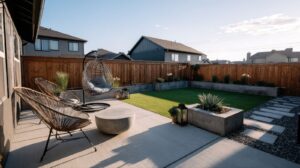
If you’re thinking about building a deck, you might be deciding between deck sizes. There are so many factors to consider to build a space that works for the size of your home and yard, as well as functioning for your family’s needs.
Before you get started on what size deck you want to have, have a rough idea of what features you want your deck to have, what you want untouched in your yard, and what style matches your home the best. A builder can help with this if you have no idea, but if you’re set on one idea or style be sure to pass that along upfront to your builder!
What’s Considered a “Normal” Deck Size?
For most builds, decks are wider than they are deep, with the longer portion of the deck running alongside the house. The average size is between 200 and 400 square feet. Decks can also be multi-level which can be especially beneficial if you have limited yard space.
If you are thinking about having a multi-level deck, you can always build one level and add the other later. Just be sure to tell your builder so that they can plan out different phases to your deck and avoid extra costs to your build later on. If you’re on a tight budget with big dreams, this could be a great route for you.
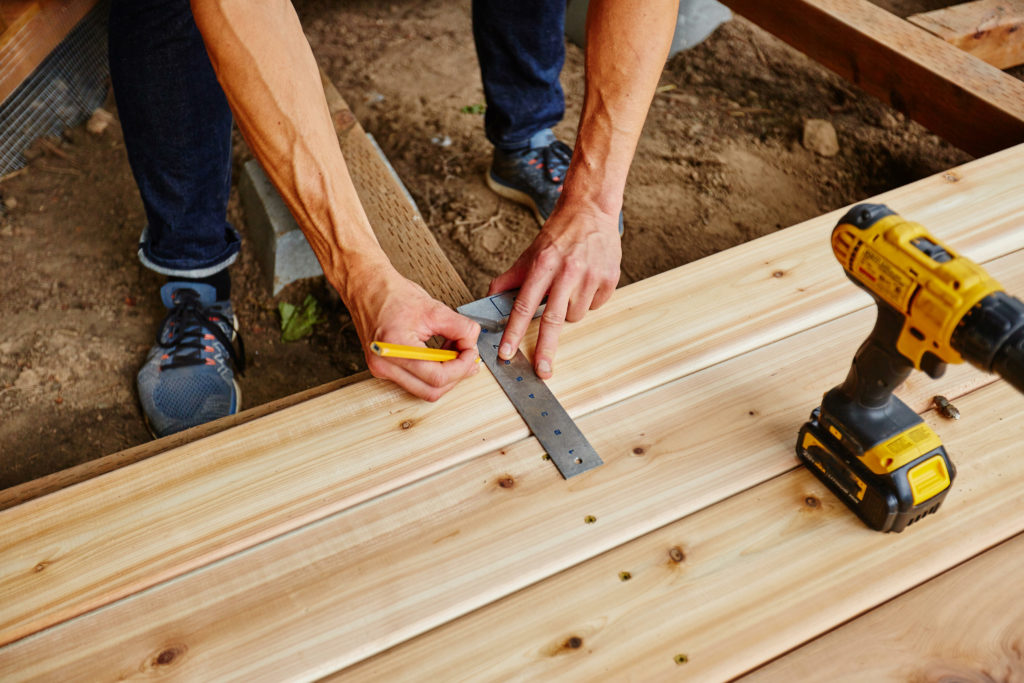
Common Deck Sizes And What Fits On Each
nWhen you begin thinking about size, it helps to picture what the deck will actually hold. A smaller deck around 8×10 to 10×12 works well if you are planning for a grill and a small bistro set where two to four people can sit comfortably. If you see your deck as more of a place to enjoy a morning coffee, this size can feel private and intentional.
A medium deck, typically around 12×16 to 14×20, has enough room for a dining table and a separate seating area. This is a good fit if you want to host family dinners outdoors while still having space to walk around without it feeling crowded. Larger decks, usually 20×20 or more, are ideal for people who want multiple zones. This can mean one area for dining, another for lounging, and even another for a grill station or fire table. If you often host gatherings, this added breathing room makes a big difference.
How Big Is Your House?
Most builders suggest that your deck should be no larger than 20 percent of the house’s square footage. Another cardinal rule is to not build a deck that is larger than the largest room in your house. However, if you are going to use your deck for two spaces, such as an outdoor dining area and a seating area, you can go bigger. So if you’re looking for an estimate of which deck sizes work for your home, just pull out a tape measure!
Of course, this is all about preference since this is your home and your deck! If you prefer to have less yard space or a huge outdoor space- live out your dream and build a huge deck. If you have no idea what deck size works for you, ask in a consultation with a builder! They have tons of experience with small to huge homes and small to huge decks. They’ll be able to create a plan that is visually appealing and suits your needs.
How Deck Size Impacts Cost?
The size of the deck has a direct relationship to its cost. As the deck area increases, so does the amount of lumber or composite material needed, the complexity of the framing, and often the number of railings or stair sections. A small deck can be fairly straightforward in terms of construction. As you move into medium and large decks, the cost can vary depending on whether you add built-in seating, transition areas, multiple staircases, or separate activity zones.
Your builder can give you a more accurate estimate once they know the shape and footprint you have in mind, but keeping budget in mind while choosing the size helps make sure your final plan is realistic and aligned with what you want to use the space for.
Know Your Limits
While we want you to have the deck size of your dreams, we have to continue to be good neighbors. Most external projects require permits and you will definitely have to get one before you start building.
Also look into local building codes, regulations and restrictions. A common restriction is how close you can build towards your neighbor’s home. You may be limited depending on if you have a well, septic tank, or drain field that are closer to your house. Your contractor should be able to help provide some insight into normal rules and regulations here as well.
Choosing Materials That Complement The Size
Different materials can change how the size of your deck feels and functions. Composite and PVC boards tend to create a clean, finished look that works especially well on larger decks where the layout is more open. Pressure treated lumber can be a good option for smaller decks or simple designs, particularly if you like the look of natural wood and don’t mind the maintenance that comes with it.
Think about how you want your deck to look in a few years and how much time you want to spend maintaining it. Larger decks often benefit from lower-maintenance materials simply because the surface area is greater. Matching the material to the scale helps the deck feel intentional and cohesive with the home.
Making It Seamless
The hardest part of choosing between deck size is finding a way to build a deck that doesn’t overwhelm the size of your yard or the size of your house. You also might have some areas of your yard you want left untouched such as a flower bed or a pool.
When you consult with the builder, be sure to let them know about these limitations. To make your deck work with your yard they can use a variety of supplies to make it blend in and be more aesthetically pleasing. They can use pavers, stones, stairs, or other materials to keep your yard intact.
Know Your Lifestyle
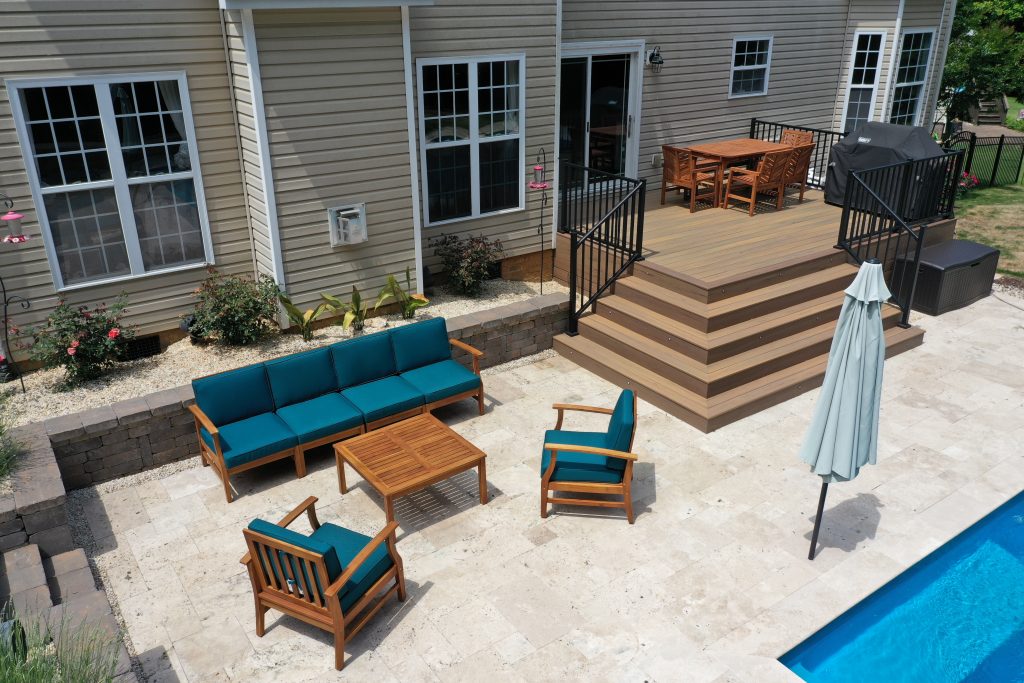
If you’re someone who always throws the family parties, you might need a bigger deck. Or if you want a secluded place to enjoy a morning cup of coffee, maybe a smaller, more private deck is for you.
There are a lot of factors to consider when you’re in between deck sizes. The size of your deck depends greatly on how you plan to entertain. If you are only considering a small grilling area and patio set, the space needed to seat 4-6 people requires about 144 square feet. For 10-12 people, you’ll want up to 288 square feet. However, if you want extra breathing room, we recommend at least 392 square feet. Consider these questions so that your builder has a real idea of what deck size will be functionable for you!
- Do you have a grill and how big is it?
- Do you want a deck with a built-in kitchen space?
- Do you want a deck with built in seating?
- What kind of events will you be hosting?
- How many people will you often be accommodating?
- Will your deck encapsulate a pool?
- Will you be putting a hot tub on the deck?
- Will you be adding additional outdoor living spaces in the future?
- Is the deck going to connect to a patio or future paver patio? (Check out our guide for inspiration)
- Do you want multiple levels?
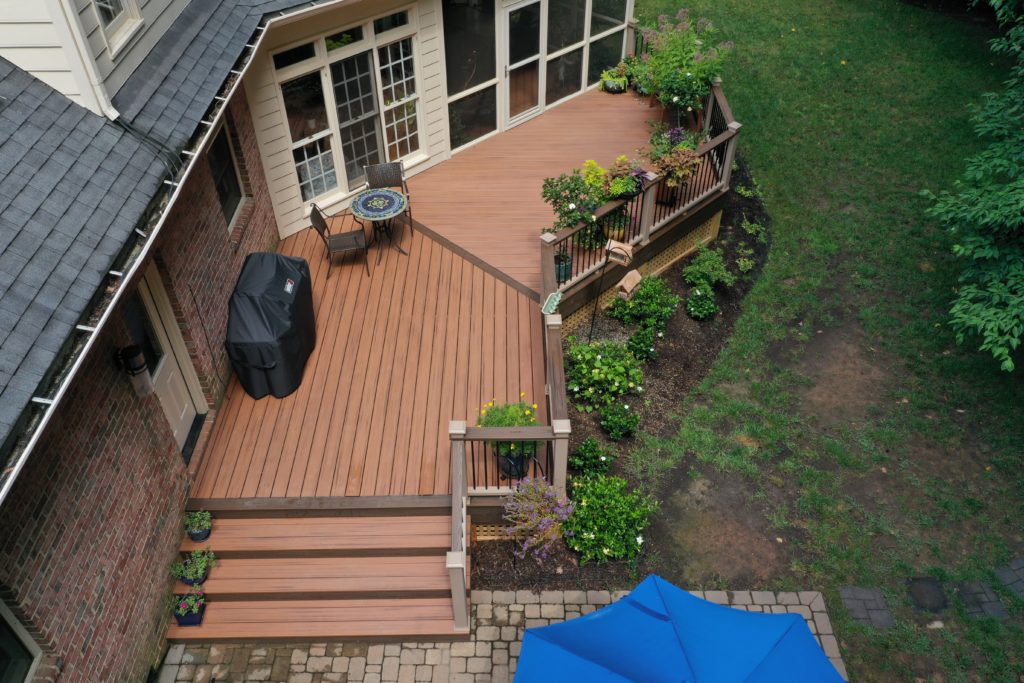
Real Examples To Help You Visualize
Seeing how others use their decks can make it easier to choose what feels right for your home. A 12×16 deck might be perfect for a family who likes to grill and eat outdoors a few nights a week. Meanwhile, an 18×24 deck can create an outdoor living room atmosphere with space for a dining table, sectional seating, and a fire feature. If you enjoy hosting friends and neighbors, or you have a larger family, this type of layout keeps everyone comfortable and gives you room to move around.

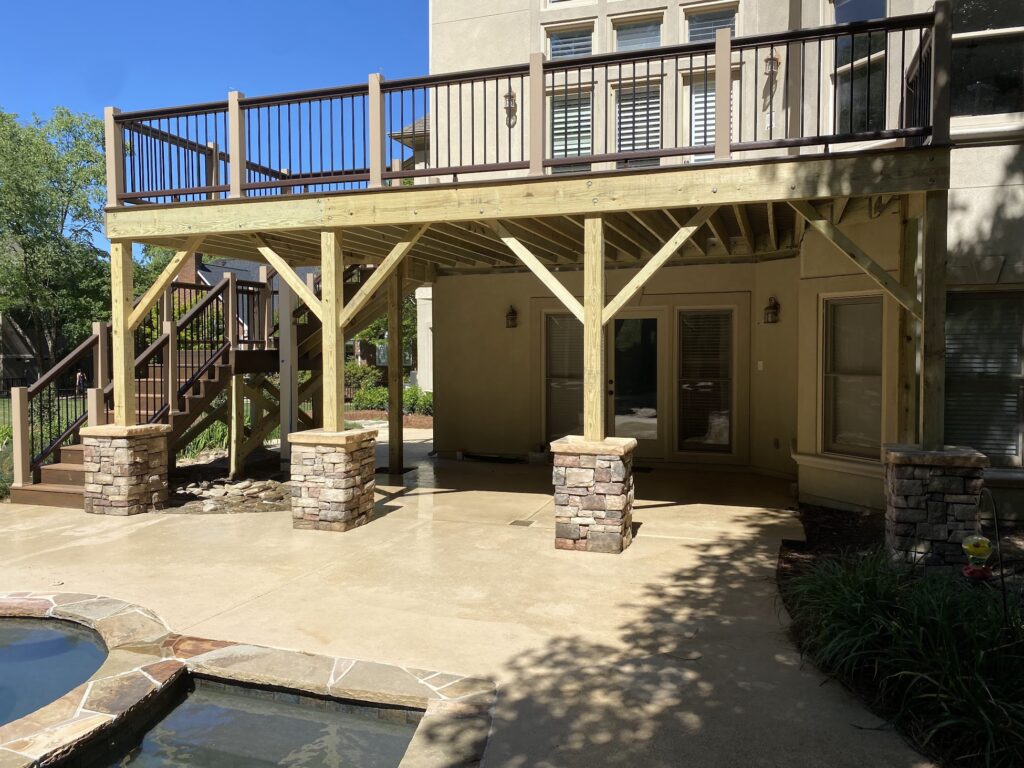
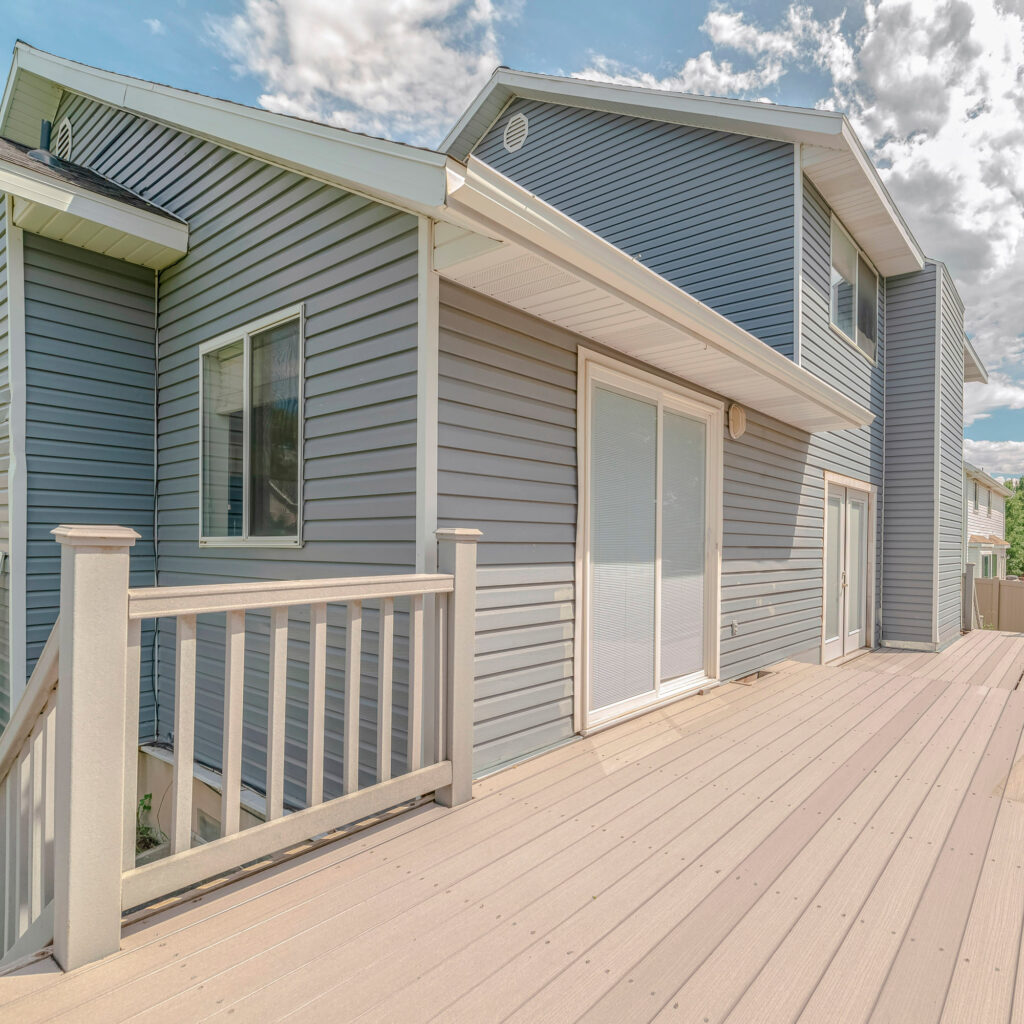
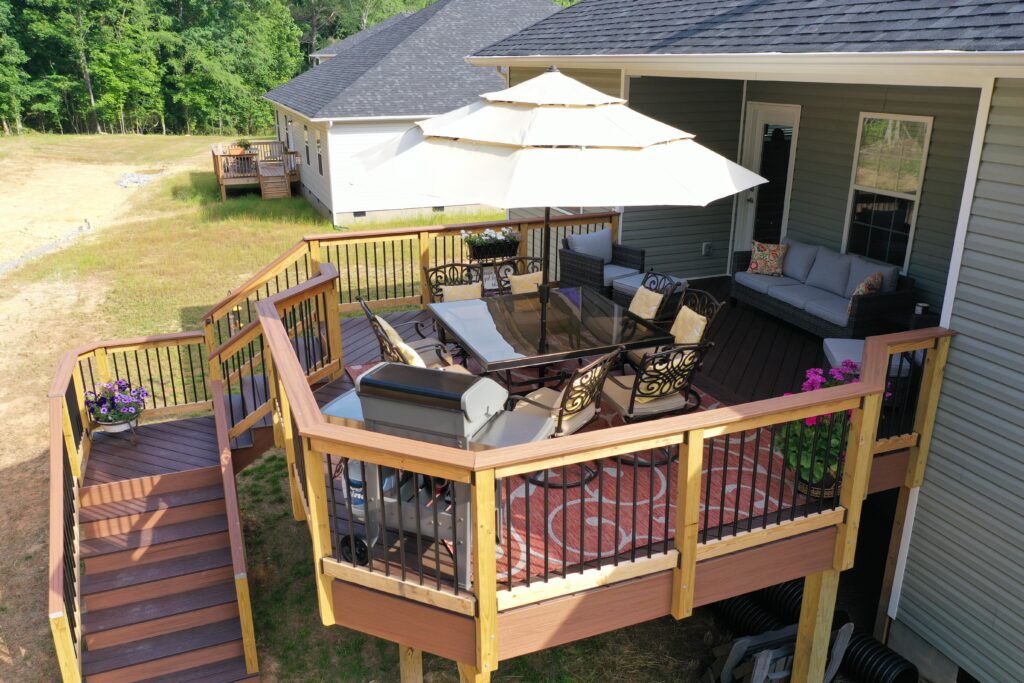
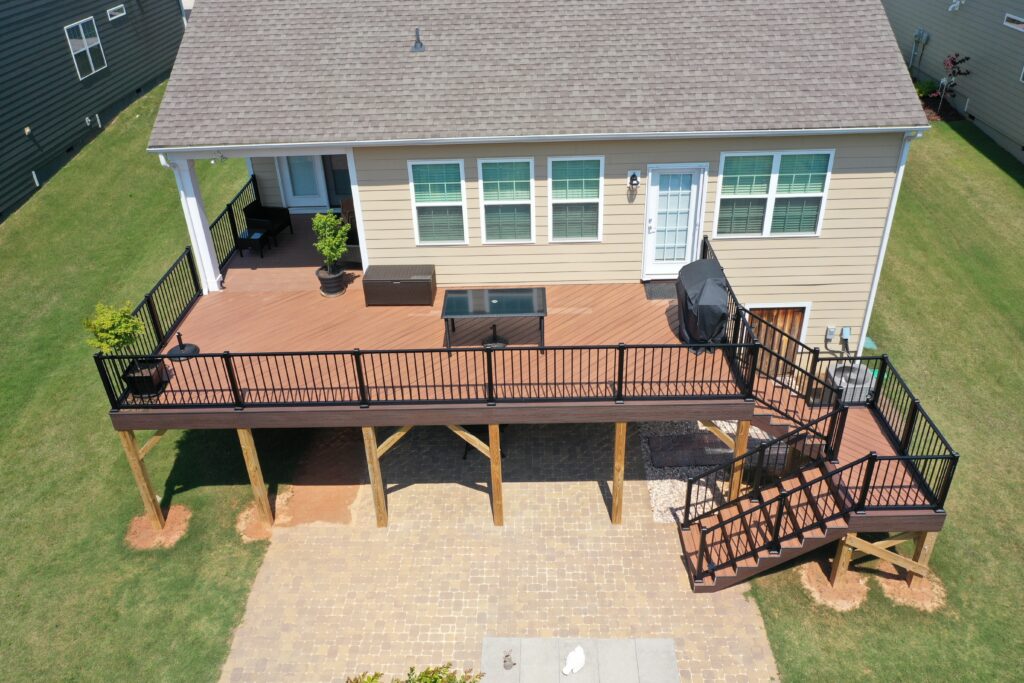
Your builder will likely have examples from past projects that can show how different deck sizes work in real life. Looking at these real layouts often helps the final decision feel much easier.
Shapes and Spaces
If you’re sitting on a huge plot of land, you have a ton of range in what your deck looks like. But if you live in the city, have a smaller home, or have a smaller yard, we will have to be a little more creative with the space to make sure it really works for you.
Space is something your builder will consider, and another reason why their expertise is so valuable. Builders installing decks in cities especially have to be creative with their space and follow strict city codes. They may advise to either use straight lines for a crisp edge or curved lines to better use smaller spaces. They can also get creative with combining straight and curved lines as well as multiple levels. These custom plans can allow you to have the deck of your dreams, and one that guaranteed none of your neighbors have.
Deck Sizes and Cost Expectations
Deck costs vary based on size, materials, and the overall design, but having a general idea can help you plan confidently. A smaller deck around 10×10 (about 100 square feet) typically starts around $3,000 to $6,000 depending on material and layout. Stepping up to something like a 12×12 usually ranges from about $3,600 to $7,200. Medium-sized decks, such as a 16×20 (around 320 square feet), may fall in the $8,000 to $14,000+ range. Larger builds, like a 20×20 (400 square feet), can range anywhere from $15,000 to $30,000 or more when using higher-end materials or adding custom features.
Most decks fall between $25 and $60 per square foot. Pressure-treated lumber is often on the lower end of the range, while composite options cost more upfront but require less maintenance over time. Design complexity, railings, stairs, and built-in seating can also influence cost. When you meet with your builder, they’ll help you narrow down a size and material combination that fits your home, your budget, and the way you plan to use your outdoor space.
How To Decide Which Deck Size Is Best For You
The best size for your deck comes down to how you live. Think about the times you’ve been outside and wished you had a bit more space, or a dedicated spot to sit, or a place where guests could gather comfortably. The right deck size should support the activities you enjoy most while still looking balanced with your home and yard. If you plan to add features later, such as a pergola or a hot tub, let your builder know so they can design the structure to support those additions in the future.
A consultation is the easiest way to talk through these details. Your builder will help translate what you want from the space into a size and layout that fits both your home and your lifestyle.
Frequently Asked Questions About Deck Sizes
What is the 3-4-5 rule for decks?
The 3-4-5 rule is a simple way to make sure your deck frame is square. Measure 3 feet on one side, 4 feet on the other, and adjust the angle until the diagonal between them measures 5 feet.
Is a 12×16 deck big?
A 12×16 deck is considered a medium-sized deck and works well for a dining table and small seating area. It’s a common size for families who want space to gather without overtaking the yard.
Is it better to use 2×6 or 2×8 for decks?
Both can work, but 2×8 joists allow for longer spans and feel sturdier underfoot. Your builder will choose based on the deck’s size, height, and structural needs.
What’s the average cost for a 20×20 deck?
A 20×20 deck can vary widely in cost depending on materials and features, but it typically starts higher than smaller builds due to the added square footage. Composite material, built-in seating, or multiple staircases can increase the total.
Should I use 4×4 or 6×6 posts for my deck?
6×6 posts are generally stronger and more stable for supporting decks, especially elevated ones. Most modern builds and code requirements lean toward 6×6 for durability.
How much space do I need around furniture on a deck?
Plan for at least a couple of feet around seating and dining areas so people can move comfortably. Giving yourself a little extra room often makes the space feel more welcoming and easier to use.
Can I add to my deck later if I start small?
Yes, many decks can be built in phases. Just let your builder know upfront so the structure is designed to expand without major changes later.